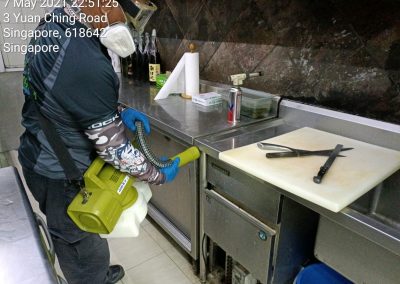
Standard cleaning may provide the protection to consider a space safe. But sanitising and disinfecting take it a step further. As the two significant ways to protect yourself and those around you against germs, it goes far beyond just removing dirt and impurities and helps eliminate harmful bacteria.
As similar as they may seem, sanitising and disinfecting have their differences. Understanding what they truly are can help you know the best situation to use each method and get a better, deeper clean for wherever you need it the most.
Here are the differences between disinfecting and sanitising.
Taking A Deeper Look
Sanitisation reduces the contamination of bacteria. This means you are lowering the number of germs to a safe level. But what is considered a safe level? That depends on public health standards or requirements in a space. For example, this includes sanitising procedures for restaurants and Singaporean eateries where we enjoy our favourite meals, schools or workplaces.
While sanitising lowers the number of germs to a safe level, disinfecting, on the other hand, doesn’t necessarily just clean but kills germs entirely. One may not necessarily have to disinfect too often as harsh chemicals used for the process should not be used regularly. Disinfecting is usually done when it is essential to destroy germs and bacteria frequently, such as in medical facilities or places where someone sick might have been.
How It’s Done?
How you perform the sanitisation process will vary, depending on your needs. You might be mopping the floor using a mop, a chemical, and water. You might also use a dishwasher to sanitise the dishes or could use an antibacterial wipe on a TV remote.
Concerning present-day circumstances, where people are more aware of their surroundings during this post-pandemic period, we’re starting to rely more on this service in our homes. It kills off harmful bacteria and viruses like COVID-19. It also stops the spread of germs and other pathogens at home, and you can get all these with the help of a home disinfection service in Singapore.
Disinfecting starts by leaving a disinfectant (usually a liquid-based chemical product or mixture) on a surface long enough to kill germs. This is called the contact time. You can generally find the contact time in your product directions. The surface should stay wet throughout contact to kill the germs.
It would be best to disinfect when you or a family member has been quarantined due to COVID-19. Otherwise, disinfecting is usually essential for bathrooms, kitchens, doorknobs, sink handles, toilet lids, and handles.
Tip: It’s best to ensure good ventilation if you use said disinfectant indoors. You’re not supposed to breathe these products into your body or even let them come in contact with your skin. They can cause serious harm if left unnoticed for long enough.
How Do They Help?
To summarise, cleaning removes impurities. Sanitising lowers the number of germs, and disinfecting essentially kills germs.
Today more than ever, it is vital that you take the appropriate measures to help protect your space against the threat of harmful bacteria. That is where the top disinfection services in Singapore come in to help. Greencare technicians are knowledgeable, with more than 30 years of experience in the latest practices for sanitisation and disinfecting.
Our services are also highly detailed and of exceptional value for your buck. Besides keeping you safe, it also helps improve your space for pathogen-free surroundings and a more hygienic environment.
Takeaway
It’s helpful to consider the relationship between cleaning, sanitising, and disinfecting as a spectrum, with cleaning at one end and disinfecting at the other. With new Covid variants on the rise, you should consider sanitising and disinfecting when someone is sick or at a higher risk of getting sick. Start by contacting a qualified home and office disinfection service in Singapore.
You could also simply consider it good practice to keep you and everybody around you safe.