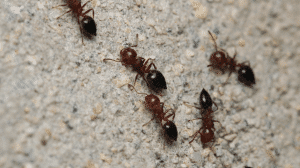
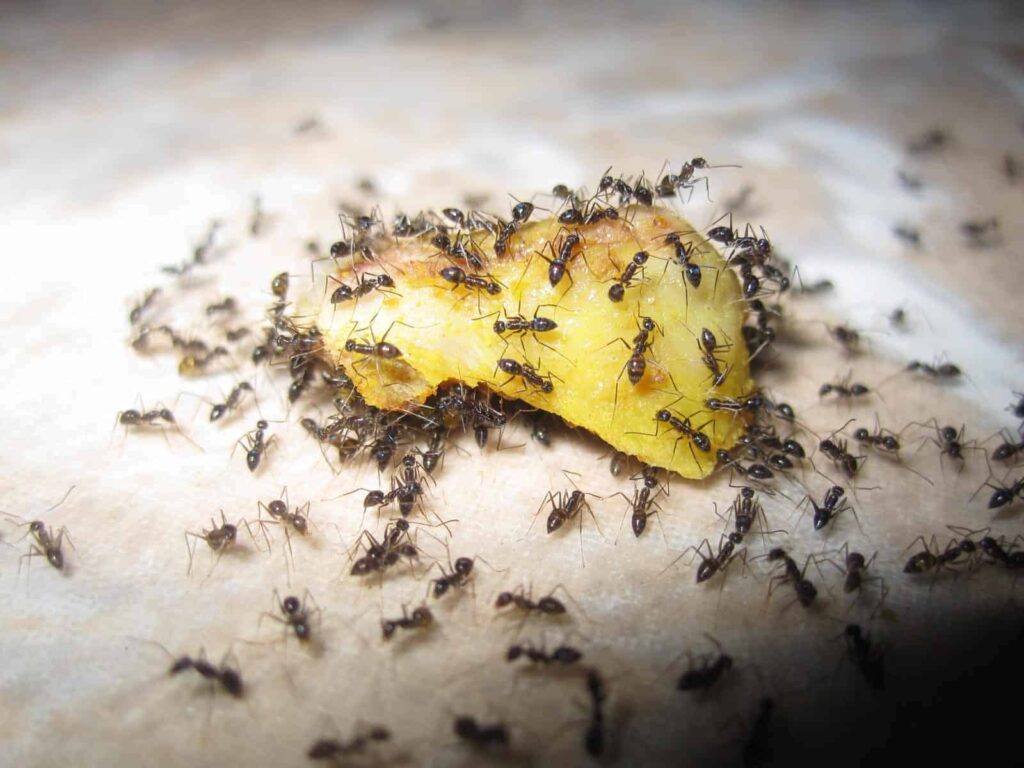
You’ve seen maybe 2-3 large black ants over the past week. Thought nothing of it. But here’s the mathematics of ant infestations:
What you see: 5 carpenter ants
What’s hidden:1,000-3,000 carpenter ants tunneling in walls, under floorboards, inside ceiling cavities
What’s actually happening:2-5 mm of wood destroyed per day × untreated infestation = structural compromise in 6-12 months
Carpenter Ants: Nature’s Silent Demolition Team
Unlike termites, carpenter ants don’t eat wood. This is the critical distinction. Termites consume the wood as a food source. Carpenter ants excavate it to create living galleries—entire tunnel systems inside your wooden structures.
Size matters: Carpenter ants are the largest common household ants, measuring 6-12mm (½ to ⅝ inch). Black carpenter ants are most common, but they can be black-and-red or entirely red.
Why Carpenter Ants Target YOUR Home
Carpenter ants are attracted to moist wood, particularly wood that has been softened by water leaks. This is critical: they don’t just randomly infest homes. They actively seek out compromised wood because:
Easier to excavate: Wet, rotting wood is soft and requires less effort to tunnel
Moisture = protection: Damp wood environments keep ants hydrated during foraging
Perfect for brood: High-humidity galleries are ideal for egg incubation
Singapore’s humid climate is PERFECT for carpenter ant infestation. Year-round moisture + wooden construction = active threat 365 days per year.
The Damage Timeline: What’s Happening Inside Your Walls Right Now
📅 Week 1-2: Silent Establishment
Initial scout ants find entry point (water leak in wall, damaged sill, crack in foundation). They mark the location with pheromones (chemical trail). You notice nothing.
📅 Week 3-4: Colony Growth
Worker ants begin excavating galleries. First 500-1,000 ants transported to colony. Wood damage begins but is internal—no visible signs yet. You see 1-2 large ants at night. Assume it’s a one-off.
📅 Month 2-3: Acceleration
Carpenter ant colonies contain primary nests (with 2,000+ worker ants) and satellite colonies. Tunneling accelerates. Sawdust accumulates inside walls. Structural wood begins losing load-bearing capacity. You notice musty smell in certain rooms. Assume it’s humidity.
📅 Month 4-6: The Point of No Return
Hidden structural damage is now significant (5mm+ in critical load-bearing areas). Multiple colonies established. Population exceeds 10,000 ants. Wood integrity compromised by 20-40%. You see ants more frequently. Floors feel slightly soft in spots. First sign that something is seriously wrong.
📅 Month 7-12: Structural Compromise
Visible symptoms emerge: Sagging beams, creaking floors, cracks in drywall around wooden frames. Wood structural integrity compromised by 50%+.
The Visible Signs You’re Missing Right Now
Carpenter ants leave forensic evidence. But because they work mostly at night and in hidden areas, most homeowners miss these signs until damage is catastrophic.
💨 Sawdust Piles
Carpenter ants expel sawdust-like shavings and wood fragments through small openings in wood
Accumulates below exit holes (looks like fine dust, not solid wood chips)
Color matches the wood (dark sawdust from dark wood)
Found near baseboards, inside cabinets, under decking
🕳️ Small Holes in Wood
Small, perfectly round openings appear on wood surfaces
Holes are 3-5mm diameter (smaller than termite holes)
Smooth edges (not splintered)
Multiple holes = active, ongoing excavation
Located on baseboards, window sills, wooden door frames, deck supports
🔊 Night Sounds
Faint scratching/crunching sounds inside walls at night (2-4 AM)
Sounds like small twigs breaking
Most noticeable in quiet environments or during silent hours
Indicates active tunneling (thousands of ants chewing simultaneously)
🫧 Structural Weakness
Wooden floors feel slightly soft or bouncy (wood’s load capacity is reduced)
Creaking sounds when walking on certain floorboards
Wooden door/window frames feel slightly loose
Visible cracks appearing around wooden structural elements
👁️ Actual Ant Sightings
Large black ants (6-12mm): Distinctly larger than common household ants
Seen at night or early morning (7-9 AM) when worker ants return to nest
Found in kitchens, bathrooms, near wooden furniture, wall baseboards
Multiple sightings over 2+ weeks = established colony, NOT passing ants
🦷 Chewed Wood Appearance
Wood that appears to have been smoothly sanded or polished from the inside
Gallery walls have a smooth, sandpapered appearance
Unlike termites (which leave rough, muddy galleries), carpenter ant galleries are pristine and clean
Visible when wood is broken open or inspected closely
Why You Can’t See the Damage (Until It’s Too Late)
This is what makes carpenter ants so deadly:
The 1-3-10 Rule of Carpenter Ant Infestation
Visible Ants: 1-3 What you see
Hidden Ants: 300-1,000 In walls
Total Colony: 1,000-3,000+ Actual threat
Explanation: Worker ants are only 1-3% of a colony. The other 97-99% are hidden in the nest: the queen, brood, soldiers, etc. You could see just 1-2 ants and have a 2,000-ant colony established in your walls.
The Wood Destruction Iceberg
What you observe: Maybe a little sawdust. A few ants. Everything looks fine.
What’s actually happening: Internal structural destruction at 2-5mm per day. Load-bearing beams reduced by 40%+ capacity. One major floor joist completely hollowed out. Multiple satellite colonies in different wall cavities.
By the time visible structural damage appears, the internal compromise is often 50%+ complete. This is why DIY attempts fail spectacularly as they only target visible ants, not the massive hidden colonies.
Why DIY Methods Will Destroy Your Home (Not the Ants)
This is the critical insight that separates successful ant control from disaster:
The DIY Spray Trap
You see carpenter ants. You buy insect spray. You spray around baseboards, door frames, and entry points.
What happens:
Visible foraging ants die (you feel like you won)
Hidden colony of 2,000 ants continues tunneling, unaffected
Colony survives and adapts to your spray
Survivors avoid the sprayed areas and find new entry points
Infestation actually SPREADS to avoid the chemical barrier
You spray again… and the cycle repeats until structural damage is catastrophic
❌ MYTH: “I sprayed the ants and haven’t seen any in 2 weeks. Problem solved!”
✓ REALITY: You killed 5-10 foraging ants. The 2,000-ant colony in your walls is:
Tunneling deeper into structural wood (away from spray zones)
Establishing satellite colonies in new locations
Adapting to your insecticide (building resistance)
Growing exponentially—queen producing 100+ new ants per day
This creates a false sense of security for weeks, while damage accelerates silently.
Why Professional Treatment is the ONLY Solution
Spray and dust treatments rarely affect carpenter ants inside nests because they don’t penetrate deep wood galleries. Professional treatment differs fundamentally:
Locate nests: Infrared thermography, acoustic detection, or detailed inspection to find primary AND satellite colonies
Target internal colonies: Inject chemicals directly into galleries or place non-repellent baits that ants carry into the nest
Eliminate the queen: Kill the reproductive source, not just workers. Without the queen, colony collapse in 2-4 weeks
Follow-up monitoring: Multiple visits over 6-8 weeks ensure total colony elimination and prevent re-infestation
Singapore’s Carpenter Ant Problem: Why It’s Worse Here
Constant moisture: Carpenter ants attack wood softened by water leaks—Singapore’s 70-90% humidity creates perfect conditions year-round
Wooden structures: HDB units, private homes, and colonial buildings contain extensive wooden frameworks vulnerable to carpenter ant damage
No winter die-off: In temperate climates, ant activity slows in winter. Singapore’s year-round 27-32°C means carpenter ants tunnel 365 days per year
Import risk: Imported wooden furniture, shipping crates, and construction materials regularly introduce new carpenter ant colonies
Late detection: Most homeowners don’t notice infestation until visible damage appears.
Frequently Asked Questions
❓ “Are carpenter ants the same as termites?”
No. Carpenter ants excavate wood to create living galleries but do not consume it as food. Termites eat wood as their primary food source. Carpenter ant galleries are smooth and clean; termite tunnels are muddy and filled with debris.
❓ “How long until structural damage becomes serious?”
6-12 months of untreated infestation.
The damage timeline depends on colony size, species, and wood type. Initial infestations (first 3 months) cause minimal visible damage but establish the foothold. By month 6, structural weakness is often noticeable (soft floors, creaking). By month 12+, repair becomes urgent.
❓ “What if I treat just my unit? I’m in an HDB block.”
Partial success only.
Individual unit treatment in HDB = 30% success rate. Block-wide treatment = 95% success. Carpenter ants travel through shared walls, pipes, and cavities. If neighbors have infestations, ants will return to your unit in 4-8 weeks. Ideally, coordinate with Town Council or neighbors for synchronized treatment.
❓ “Can I live in my home while it’s being treated?”
Yes, with precautions.
Professional ant treatment is safe for families and pets when done properly. NEA-approved baits and targeted spraying in non-living areas are safe for kids and pets. Your pest control provider should explain all safety measures.
Stop the Silent Destruction
Carpenter ants are tunneling through your home RIGHT NOW while you read this.
Structural damage accelerates daily. Treatment cost multiplies with each passing month.
✓ Structural damage assessment • ✓ Species identification • ✓ Hidden colony location • ✓ NEA-approved treatment plan • ✓ 6-week elimination guarantee with follow-ups
Sicknesses Cockroaches Bring in Your Singapore Home What Pest Control Companies Don’t Tell You (But Your Family Needs to Know) One Cockroach You Didn’t See Last Night Could Sicken Your Child This Week Singapore’s humid, densely-packed housing makes cockroach infestations 70% more common than developed countries. But what makes it worse? Most Singaporean […]
Mosquitoes Singapore March 2026: Dengue Season Peak & Wolbachia Control Rainy Weather Increasing Breeding, Wolbachia Reduces Cases 70%, Prevention B-L-O-C-K Singapore’s Perfect Storm for Mosquitoes: March 2026 Weather Report Current Conditions (March 22-26, 2026): Singapore is experiencing partly cloudy skies with temperatures hovering around 31°C (88°F) and high humidity levels. The critical factor: […]
Species Identification, Treatment Costs SGD $80-280, DIY Solutions & Professional Help Why Ants Are Singapore’s Most Persistent Household Pest Singapore is home to over 409 ant species (documented by Lee Kong Chian Natural History Museum), but only a handful invade homes. What makes ants so dangerous isn’t their bite—it’s their strategy. A single ant […]
Get A Free Estimate Or Quote
Get a quick, no-obligation quote from
Greencare. A specialist will contact you as soon
as
possible. Or You May Call Us: