Singapore’s Perfect Storm for Mosquitoes: March 2026 Weather Report
Current Conditions (March 22-26, 2026): Singapore is experiencing partly cloudy skies with temperatures hovering around 31°C (88°F) and high humidity levels. The critical factor: rain is expected most days this week (35-50% precipitation chance)—creating millions of tiny breeding sites for Aedes mosquitoes.
The danger window: Every raindrop that sits for 48+ hours in a container = potential mosquito breeding ground. A single 20-cent coin-sized puddle can produce 100+ mosquitoes within two weeks. With forecast rain through March 26, Singapore is entering peak dengue season breeding period.
2026 Reality: Dengue is endemic in Singapore year-round, but rainy March-April weather spike = exponential mosquito population growth = dengue cluster notifications spike. Plus, a major breakthrough: Wolbachia-infected mosquitoes are now being deployed island-wide after showing 70% dengue case reduction in trial areas.
🌧️ Why March 2026 Rain = Mosquito Crisis
Singapore’s tropical climate (27-32°C, 70-90% humidity) is already perfect for dengitoes. But rain transforms it into a CRISIS:
How Rain Creates Mosquito Explosions
Stagnant water everywhere: Gutters, plant pots, flower vases, clogged drains, coconut shells, old tires, bottle caps—anything that collects water becomes a breeding factory
Aedes breeding cycle accelerates: Eggs hatch in 48 hours. Nymphs mature in 7-10 days. A female can lay 100-200 eggs per day. Simple math: Rain on March 22 = 1,000+ mosquitoes by early April
Multiple breeding sites: One HDB unit typically has 5-10 water-collecting containers. Block of 100 units = 1,000 breeding sites. During rain, every site fills = exponential population growth
Transmission acceleration: More mosquitoes = more dengue transmission. An Aedes female bites multiple people per day. If any are dengue-infected, virus spreads rapidly
⚠️ March 2026 Weather Alert: Peak Breeding Conditions
This week’s forecast: 35-50% daily rainfall chance through March 26. High temperatures (87-88°F). Result: Optimal mosquito breeding weather. Expected mosquito population surge: 300-500% above baseline within 2 weeks.
🦟 Aedes Mosquitoes: Singapore’s Dengue Vector
Two species dominate Singapore’s dengue threat:
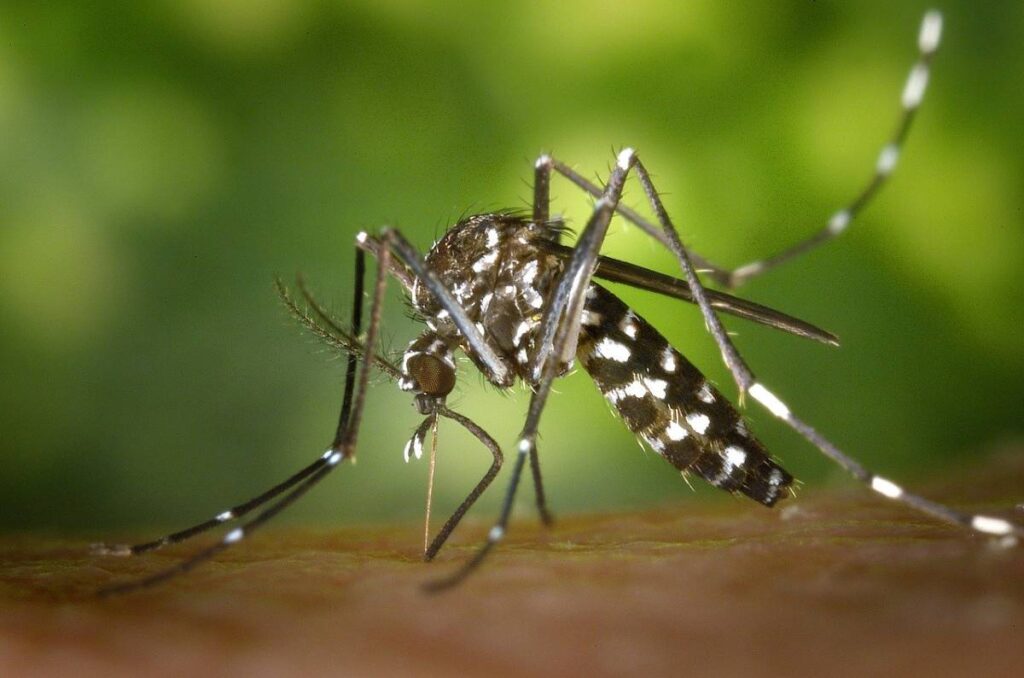
Aedes aegypti (Primary)
Size: 5mm, black with white stripes Habitat: Indoors, dark corners, cool spaces Breeding: Artificial containers (flowerpots, buckets) Behavior: Day-biting (morning, dusk) Danger: 85% of Singapore dengue cases
Aedes albopictus (Secondary)
Size: 5mm, black with white stripes Habitat: Both indoor and outdoor Breeding: Natural containers (leaf axils, tree holes) Behavior: Day and night biting Danger: 15% of Singapore dengue cases
Key fact: Both species can bite an infected person, become infectious within 8-12 days, and transmit dengue to the next person they bite. No symptoms needed in the mosquito. A silent carrier flying around your home.
😷 Dengue Threat in Singapore: 2026 Status
Why Singapore Has Recurring Dengue Despite 60 Years of Control
Low population immunity: Due to successful control in 1970s-1980s, few Singaporeans were infected = fewer with natural immunity. New dengue serotypes introduced constantly = vulnerable population
High urban density: 5.6 million people in compact city = ideal for virus transmission. One infected person on MRT = virus spreading to 10+ people the next day via mosquito bites
Four dengue serotypes: You can get dengue 4 times in your lifetime (once per serotype). Second infection = higher risk of dengue hemorrhagic fever (DHF), which can be fatal
International travel: Imported cases from Thailand, Malaysia, Indonesia constantly introduce new virus variants
Symptoms of Dengue (8-12 Days After Bite)
Sudden high fever: 40°C+ for 2-7 days
Severe body aches & joint pain: Feels like bones breaking
Headache & eye pain: Especially behind eyes
Rash: Appears after fever subsides
Nausea/vomiting
Dengue hemorrhagic fever (DHF):Rare but dangerous—bleeding, organ failure, death risk 1-5% if untreated
⚠️ Dengue Is No Small Matter
Singapore’s 2026 MOH campaign: “This is No Small Matter.” Severe dengue can cause hemorrhagic fever, organ failure, and death. No specific treatment exists. Prevention is the only strategy. One dengue infection = 5-7 days hospitalization + SGD $2,000-5,000 medical costs.
February 2026 News: A groundbreaking Singapore trial showed that Wolbachia-infected male mosquitoes can reduce dengue transmission by 70%. This is now being implemented island-wide.
How Wolbachia Works
The mechanism: Male Aedes mosquitoes are infected with Wolbachia bacteria. When they mate with wild females, the eggs don’t hatch (cytoplasmic incompatibility). Over time, the wild mosquito population crashes without reproducing.
Results from 2-year Singapore trial:
Wild mosquito populations decreased 77% in treated areas
Dengue cases reduced 70% in residential neighborhoods
No chemicals used—completely biological control
Safe for humans and pets (Wolbachia doesn’t harm people)
Why Wolbachia Is Game-Changing
Addresses resistance: Mosquitoes are developing resistance to traditional insecticides. Wolbachia bypasses this
Long-term solution: Not a one-time spray. Wolbachia self-perpetuates in mosquito populations
Complements traditional control: Works alongside B-L-O-C-K prevention + source reduction + insecticides
✓ Wolbachia + Traditional Control = Best Defense
Wolbachia reduces mosquito population 70%. You still need to: (1) Eliminate breeding sites (B-L-O-C-K), (2) Use repellents (DEET), (3) Wear protective clothing. Combined approach = comprehensive dengue defense.
Singapore’s Ministry of Health recommends the B-L-O-C-K system for preventing mosquito breeding:
B: Buckets & Plant Pots
Check and empty all containers collecting water. Even small amounts. Daily check required during rainy season.
L: Leaf Axils (Leaf Joints)
Water collects between leaves and stems. Poke tiny holes with pin for drainage. Empty leaf axils in plants daily.
O: Old Containers & Trash
Remove old tires, bottles, cans, containers. If keeping items outdoors, invert them or drill drainage holes. No flat surfaces that collect water.
C: Clogged Drains & Gutters
Clean gutters, downpipes, drains weekly. Even a small blockage creating stagnant water = mosquito breeding site. Use drain covers to prevent blockage.
K: Keep Surroundings Clean
Remove clutter, dead leaves, debris that can trap water. Maintain proper yard/balcony drainage. No standing water anywhere.
S-A-W for Personal Protection (If in Dengue Cluster)
S: Seek medical advice if fever appears
A: Apply insect repellent (DEET-based)
W: Wear light-colored, loose-fitting clothes
🧴 Personal Protection: Effective Mosquito Repellents
Best Repellent Ingredients (Proven Effective)
Ingredient
Effectiveness
Duration
Safety
DEET (N,N-diethyl-m-toluamide)
95%+ protection
4-6 hours
Safe for children >2 months (10-20%)
Picaridin
90%+ protection
6-8 hours
Safe for children >2 months
IR3535
85%+ protection
3-5 hours
Safe for children
Lemongrass/Peppermint oils
30-50% repellent
1-2 hours
Natural but short-acting
How to Apply Repellent Correctly
Spray distance: 15-20cm from skin. Not directly on face
Coverage: All exposed skin (arms, legs, neck, behind ears)
Reapplication: Every 4-6 hours (DEET) or after swimming
Avoid wounds: Don’t apply to cuts, wounds, or irritated skin
Clothing: Apply to clothing as well as skin for double protection
Additional Protection Methods
Long sleeves/pants: Especially indoors during morning (5-9am) and dusk (5-7pm) when Aedes bites most
Mosquito nets: Sleep under nets, especially during day naps
Air conditioning: Cool rooms deter Aedes (prefer 25°C+ environments)
Mosquito screens: Install on windows and doors to prevent entry
❓ Common Questions
If I had dengue once, am I immune? You’re immune to that serotype for life. But there are 4 serotypes. Second infection = 30% higher risk of dengue hemorrhagic fever. Still need prevention.
Is dengue vaccine available? Dengvaxia is available but only for people ages 12-45 who have had previous dengue infection. Not recommended for those never infected (only 20% know this). Not part of Singapore’s standard immunization program.
Can I get dengue twice? Yes. Four serotypes = possible to get dengue 4 times. Second infection is riskier (DHF risk). Prevention is critical.
How common is dengue hemorrhagic fever? Rare (1-5% of dengue cases). But fatal if untreated. Proper hospital care reduces death risk to <1%.
Why is individual treatment sometimes useless? Dengue requires community action. Your neighbor’s mosquito population = your mosquito population. Block-wide prevention necessary. One unit treating B-L-O-C-K while neighbors ignore it = reinfection in 2-3 weeks.
🦟 Mosquitoes Singapore March 2026: Dengue Season Peak & Wolbachia Control Rainy Weather Increasing Breeding, Wolbachia Reduces Cases 70%, Prevention B-L-O-C-K Singapore’s Perfect Storm for Mosquitoes: March 2026 Weather Report Current Conditions: Singapore is experiencing partly cloudy skies with temperatures hovering around 31°C (88°F) and high humidity levels. The critical factor: rain […]
🪵 Termites (White Ants) in Singapore: Complete Control Guide Detection, Prevention, Treatment Costs & Protection for HDB, Condos & Landed Homes The Silent Destroyers: Why Termites Are Singapore’s Costliest Pest Termites—commonly called “white ants” in Singapore—are one of Asia’s most destructive pests. A single colony of 60,000 termites can consume a 2×4 […]
Fruit Flies in Singapore Explosive breeding, fermentation sites, and professional elimination Fruit Flies: A Kitchen Explosion Fruit fly infestations in Singapore explode rapidly. These tiny insects breed in 4-6 days, meaning populations double within a week. Unlike house flies (larger, slower breeding), fruit flies are almost invisible and breed in fermented fruits, drains, and […]
Get A Free Estimate Or Quote
Get a quick, no-obligation quote from
Greencare. A specialist will contact you as soon
as
possible. Or You May Call Us: